
- Precision Care for a Stronger Spine
- +91-8448479865
+91-8448479865
drprankulsneuro@gmail.com
Herniated Disc
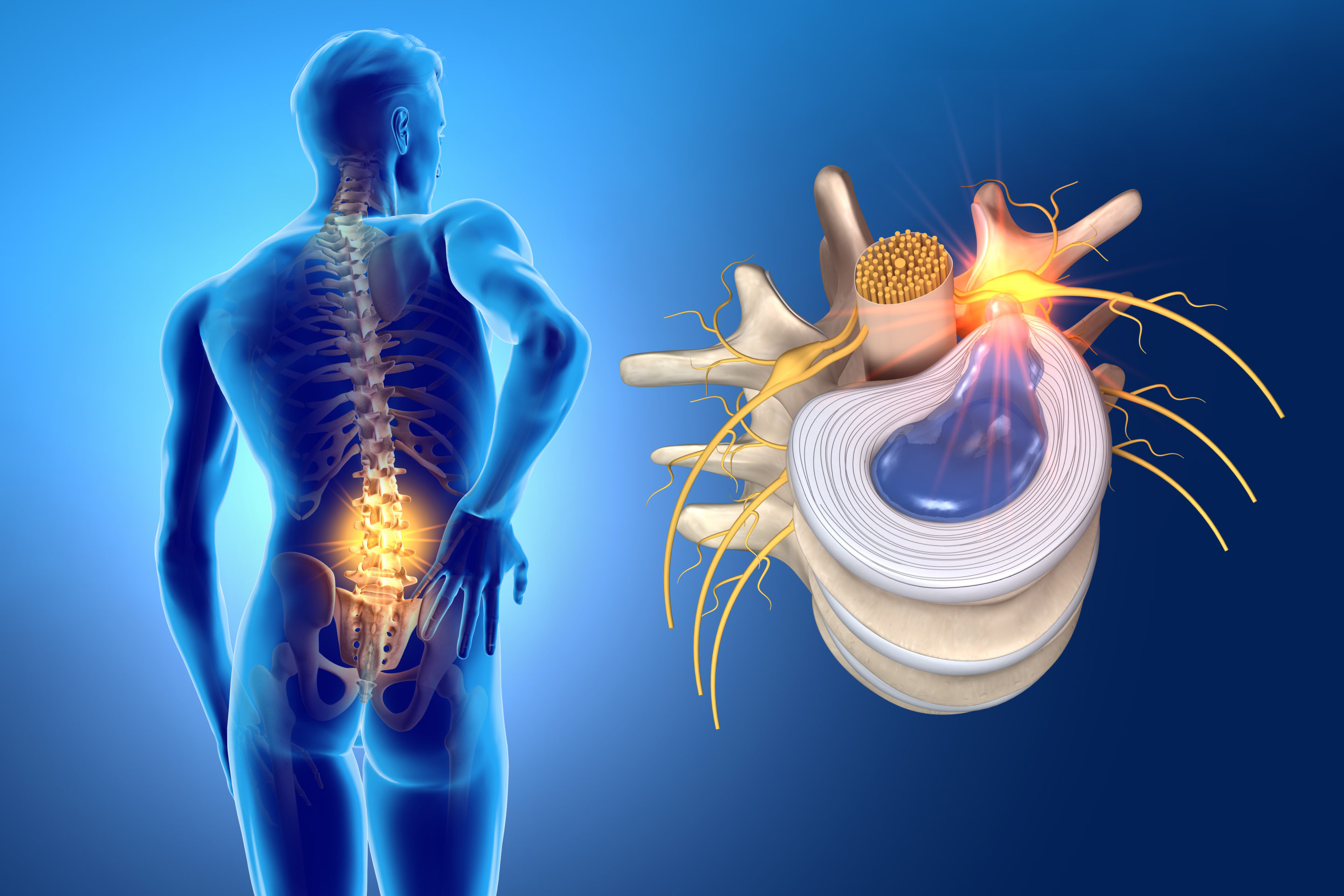
Herniated Disc Treatment in Noida
Herniated Disc
A herniated disc, also called a slipped or ruptured disc, is a common spinal condition. It occurs when the soft inner portion of a spinal disc pushes out through a tear in the tough outer layer. This condition can cause back pain, numbness, and weakness if it presses on nearby nerves.
What is a Herniated Disc?
The spine is made up of vertebrae cushioned by discs that act as shock absorbers. When a disc’s outer shell weakens or tears, the inner gel-like material may bulge or leak out. This herniation usually happens in the lower back (lumbar spine) but may also occur in the neck (cervical spine).
Causes of a Herniated Disc

Aging and wear-and-tear: Natural degeneration of spinal discs.
Injury or trauma: Sudden strain, heavy lifting, or accidents.
Repetitive movements: Constant bending, twisting, or poor posture.
Obesity: Excess weight puts pressure on the spine.
Genetic predisposition: Some people have a higher risk due to family history.
Symptoms of a Herniated Disc
The symptoms depend on the disc’s location and whether nerves are affected. Common signs include:
Sharp or radiating pain in the back or neck
Pain spreading to arms or legs (sciatica in lumbar cases)
Numbness or tingling in affected areas
Muscle weakness in arms or legs
Difficulty with walking or standing for long periods
Diagnosis of a Herniated Disc
Doctors use a combination of examinations and imaging tests, such as:
Physical exam: Checking reflexes, strength, and mobility.
MRI scan: Provides detailed images of discs and nerves.
CT scan or X-rays: Helps rule out other causes of pain.
Nerve tests: Detect nerve damage or irritation.
Treatment Options for a Herniated Disc
Non-Surgical Treatments
Rest and activity modification: Avoid activities that worsen pain.
Medications: Pain relievers, muscle relaxants, and anti-inflammatories.
Physical therapy: Strengthening and stretching exercises improve spine stability.
Epidural injections: Corticosteroid injections reduce nerve inflammation.
Heat or cold therapy: Helps relieve discomfort and muscle spasms.
Surgical Treatments
Surgery is considered if symptoms do not improve with conservative treatment. Common procedures include:
Discectomy: Removal of the herniated portion of the disc.
Laminectomy: Relieving pressure by removing part of the vertebra.
Spinal fusion: Fusing vertebrae to stabilize the spine.
Prevention of Herniated Disc
Maintain a good posture while sitting and standing.
Exercise regularly to strengthen back and core muscles.
Lift heavy objects with proper technique.
Maintain a healthy body weight.
Avoid smoking, as it accelerates disc degeneration.

🎓 Mch Neurosurgery, MCI Neurospinal surgeon